Commercial Waste in Great Bookham

Commercial waste in Great Bookham needs a practical, dependable approach that keeps everyday operations moving while the right materials are separated for recycling, recovery, and lawful disposal. We handle a broad mix of business waste streams, from routine office clear-outs to heavier premises waste, with a service shaped around the type of material, the volume involved, and the access available at your site. The aim is straightforward: remove unwanted commercial waste efficiently and leave you with a tidier, more workable space.
If you are comparing options, our service is built around clear collection planning rather than one-size-fits-all handling. Different commercial waste streams need different treatment, and the right approach often depends on what is mixed together, whether items can be recycled, and whether there are storage or access constraints on the day. Pricing and quotes can help you understand the main factors involved before you decide how to proceed.
For a simple next step, think about the kind of waste you need removed, the time window that suits your business, and whether there are any bulky or restricted items within the load. If you want a quotation, you can send over a concise description of the waste and the location details that matter for access. A clear request makes it easier to match the work to the right collection method.
Business waste removal for workplaces, premises and trade settings

Business waste removal covers the everyday materials that arise in commercial settings, including packaging, mixed office waste, display fixtures, stockroom clearances, and general unwanted items that are no longer needed on site. Our approach is to keep the process orderly, with attention to separating suitable recyclables from residual waste so the load can be dealt with properly. That matters when premises need to stay operational and the collection has to fit around staff, customers, or deliveries.
For many organisations, the key question is not simply how much waste there is, but how it is stored and what else is in the same load. Mixed materials can be planned more carefully when they are grouped in advance, and that often makes the collection more efficient. Business waste removal is the core service for day-to-day commercial clearances, while waste removal gives a wider overview of the general service scope.
What types of commercial waste can be included
Commercial waste can include general office rubbish, unwanted fixtures, office furniture, redundant storage items, packaging materials, and assorted non-hazardous items from retail, light industrial, or service premises. The precise handling depends on whether the material can be recycled, whether it needs separating, and whether any item requires special attention because of size or composition. Where appropriate, we can help manage collections that combine several types of ordinary business waste in one visit.
Office clearance and workplace equipment
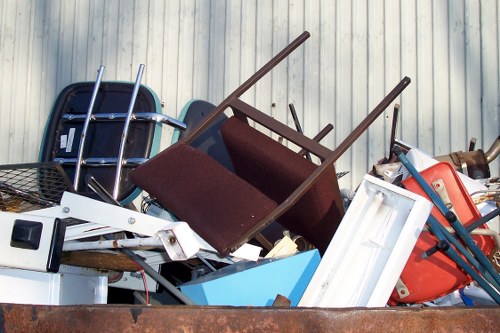
Office clearance is often needed when workstations change, departments move, or older furniture and equipment are being replaced. The service can cover desks, chairs, filing cabinets, shelving, reception items, and other workplace contents that are no longer required. Careful clearance matters because office waste often includes a blend of recyclable metals, reusable fixtures, and general disposal items that should not all be handled in the same way.
Where paper records or confidential material are involved, it is sensible to separate what must be destroyed securely from what can simply be removed with the rest of the office contents. Office clearance is designed for those more structured workplace jobs, and confidential shredding is relevant when paperwork needs a secure disposal route. If a clearance involves old electronics or specialist equipment, it is better to identify that early so the load can be managed appropriately.
Planning office jobs without unnecessary disruption
Office collections work best when the principal items are grouped in advance and access routes are kept as clear as possible. That can mean setting aside furniture, separating recyclable cardboard, and identifying any objects that should not be mixed in with general waste. A brief inventory can help, but it does not need to be elaborate: a short list of the main items and any access constraints is often enough to prepare a sensible quotation.
Furniture, fixtures and bulky item disposal
Many commercial waste jobs involve bulky furniture rather than loose rubbish. Old desks, meeting tables, chairs, storage units, counters, and similar items can take up valuable space if they are waiting in corners or stored after a refit. Furniture disposal is useful when businesses want individual items removed without organising a full premises clearance, and it can sit alongside other non-hazardous waste from the same location.
There can be a practical difference between furniture that is still reusable, items that are suitable for recycling, and those that are ready only for disposal. Furniture disposal is the general route for unwanted pieces, while furniture clearance covers larger collections of mixed furnishings. For upholstered items, mattress and sofa disposal is a more specific option when those bulky household-style pieces appear in commercial settings such as managed properties or furnished premises.
Some businesses prefer to clear furniture in stages, particularly where premises are still being occupied or where access is limited to certain hours. In those cases, it helps to identify the heaviest items first, then group smaller pieces around them so the collection can be arranged sensibly. A simple note about floor level, lift access, narrow corridors, or loading restrictions can make the process smoother.
Site clearances for garages, lofts and storage areas
Commercial premises often accumulate waste in storage areas, back rooms, loft spaces, garages, and other out-of-the-way places that are not used every day. These areas can contain mixed items from several years of use: redundant stock, packaging, broken tools, shelving, archive boxes, and general clutter that needs separating before it can be removed. A clear-out of this kind is usually more efficient when the different categories are identified before collection day.
Garage clearance and loft clearance are useful when stored waste is difficult to reach or when access is more awkward than a standard room clearance. Home clearance and flat clearance can also be relevant to mixed-use properties or premises with residential-style storage areas, while house clearance is more suited to full-property clearances where that is the actual setting. The right service depends on the type of space and the waste being held there.
Before asking for a quotation, it helps to identify whether the storage area contains loose waste, boxed items, or bulky pieces that need extra handling. If you are unsure how much of the load is recyclable, a short description is still useful because it lets us plan the most suitable removal method. For a straightforward start, you can keep the waste grouped by area and note any access limits that apply to the building.
Garden and exterior commercial waste
Commercial sites often generate exterior waste as well as indoor clutter. Garden and grounds waste can include cuttings, branches, bags of leaves, broken planters, old timber, damaged edging, and general outdoor rubbish that has built up around entrances, rear yards, or landscaped areas. This type of clearance works best when green waste is separated from harder materials, because that makes sorting and disposal more efficient.
Garden clearance is the most direct option where the job is mainly outdoor material, while builders waste clearance is more relevant if the exterior area also contains rubble, timber offcuts, packaging, or refit waste. If your site includes mixed debris after maintenance or landscaping work, it is useful to say so in the quotation request so the load can be matched to the right collection approach.
Outdoor collections can be affected by pathways, gate widths, surface conditions, and where the waste has been stacked. Those details do not need a long explanation, just enough to show whether the waste is easy to reach or needs carrying from a more awkward spot. Good access notes make the service easier to arrange and reduce the chance of surprises on the day.
Building, refurbishment and trade waste
Building and refurbishment waste often looks very different from ordinary office or premises rubbish. It can include plasterboard, timber, packaging, old fittings, tiles, broken units, and mixed debris from strip-out work or light renovation. Because these loads are often heavier and more varied, careful separation and assessment are especially important. The goal is to deal with the waste in a way that is orderly, sensible, and appropriate to the materials present.
Builders waste clearance is designed for those project-related loads, while recycling and sustainability explains how recovered materials can be handled within the wider service. Where a job includes items such as old appliances from a refit or kitchen strip-out, it may also be useful to look at fridge and appliance removal. Not every building job is the same, so a clear description of the materials helps determine the right collection plan.
How to think about mixed renovation waste
Mixed renovation waste can be sorted into broad groups before collection: reusable or recyclable materials, heavy inert waste, bulky fittings, and residual rubbish that cannot be separated further. That does not require a full audit; a practical breakdown is usually enough. If your premises have ongoing works, it can also help to note whether the clearance is a one-off removal or part of a staged project, because the timing of the collection may affect how the waste is accumulated.
Recycling, recovery and responsible handling
Not all commercial waste should be treated in the same way. Some items are suitable for recycling, some can be recovered through separate streams, and some have to go into residual disposal once the recyclable parts have been removed. A sensible commercial waste service keeps those distinctions in view, because good sorting can reduce unnecessary disposal and helps the load move through the right channels.
We can discuss the broad handling of mixed waste when you enquire, especially if your business generates more than one type of item in a single clear-out. Recycling and sustainability gives a useful overview of the environmental side of the service, while what can go in a skip is helpful background if you are comparing different waste removal methods. For some premises, the main decision is simply whether the load is mostly recyclable, mostly residual, or genuinely mixed.
When a load contains several material types, a careful first sort usually saves time later. That does not mean the customer has to do all the work in advance; it means the collection is easier to plan when obvious categories are visible. A few separated piles can be more helpful than one mixed heap, particularly where there are cardboard, wood, metal, and general rubbish all together.
Pricing factors, booking details and useful preparation
Commercial waste quotations usually depend on the volume of material, the types involved, access to the site, and whether any items need special handling because of their weight or composition. Loads made up of straightforward general waste are often easier to assess than mixed clearances with bulky furniture, equipment, or awkward storage access. If a job includes heavier items or a wider spread of materials, saying that clearly from the start helps the quotation reflect the actual work.
If you are preparing an enquiry, you do not need a long form of description. A short summary of the main waste types, approximate quantity, where the items are located, and any obstacles such as stairs or limited parking is usually enough to begin. Book online if you already know what needs removing, or use contact us when you would rather ask a specific question before arranging the work. One clear message is often better than several partial updates.
Useful details to include are the type of premises, the broad waste category, and whether the items are ready for loading or still spread across several rooms. If there are items you want left in place, make that clear as well. A well-scoped request can save time on both sides and makes it easier to match the collection to the right service.
About Great Bookham
Great Bookham is a village in Surrey, within the borough of Mole Valley, and it sits between Leatherhead and Effingham in the central part of the county. It is one of the two Bookham settlements, with the larger built-up village commonly distinguished from Little Bookham. The area developed from an older rural parish landscape and still shows a blend of historic village form and later suburban growth. Its centre contains a mix of local shops, services and residential streets, while the surrounding landscape opens toward the North Downs and the countryside of the Surrey Hills. The village is closely associated with Box Hill and the wider chalk ridge that shapes much of north Surrey’s scenery. Great Bookham has a long-settled character, with churches, village greens and older buildings reflecting centuries of habitation. St Nicolas Church is one of the well-known historic landmarks, and the village layout also includes conservation-minded streets and green spaces that preserve its quieter identity. Nearby parkland and open countryside give the settlement a strong semi-rural feel, even though it remains within reach of larger commuter routes. Like many Surrey villages, it combines older local heritage with modern housing and community life, and its name continues to mark a place with a distinct sense of continuity rather than a purely urban district.
Further clearance services for different types of waste
Some commercial sites need more than one kind of clearance over time, so it helps to understand the supporting services available alongside standard waste removal. Fridge and appliance removal is relevant where old white goods appear in staff kitchens, refreshment areas, or refit projects, while hazardous waste disposal is the correct route for materials that require specialist treatment rather than ordinary collection. These services should be selected carefully according to the actual item or substance involved.
For businesses that generate sensitive paperwork, confidential shredding offers a focused way to handle records that must not be mixed with general waste. If a premises clear-out includes a mixture of furniture, general rubbish, and storage contents, it can also be worth revisiting about us for a broader overview of the company’s general approach to service organisation and customer support. The right mix of pages can help you choose the most appropriate route without overcomplicating the task.
If you are ready to move forward, send a concise description of the waste, the premises type, and the access details that matter. That is often enough to begin the quotation process. For the final step, use the quotation page or get in touch so the collection can be planned around the load you actually need removed.