
Complaints Procedure for Commercial Waste Great Bookham
The following procedure explains how we handle complaints about commercial waste services in Great Bookham and surrounding service areas. This document sets out a clear, fair and transparent approach to registering concerns about rubbish collection, skip services, recycling collections and other refuse management activities. It is intended to ensure that every complaint is treated with respect, investigated promptly and used as an opportunity to improve operational performance. We aim to resolve most matters quickly, but formal stages are available when needed.Scope and Principles
Our complaints policy covers all operational and service-delivery issues relating to commercial waste removal, including missed collections, contamination disputes, incorrect invoicing queries arising from waste contracts, and unsafe or non-compliant disposal activities. Key principles include impartiality, confidentiality and timely responses. We will record every complaint, provide transparent updates and ensure that those raising issues are informed of possible outcomes. The approach is intended for businesses and organisations using commercial refuse collection Great Bookham services.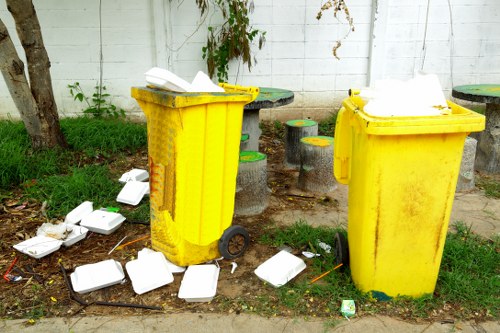 What counts as a complaint — A complaint is any expression of dissatisfaction about the provision, or failure to provide, a contracted waste management service. Examples include persistent missed pickups, damage to property during collections, issues with presented containers, or concerns about the professionalism of collection crews. Issues that are health-and-safety related will be prioritised for immediate attention, while billing and administrative matters will be logged and investigated in line with standard commercial waste dispute handling.
How to Submit a Complaint
If you need to raise a concern about commercial waste services in the area, you should make the complaint clearly and include relevant details such as dates, locations, vehicle or crew identifiers (if known), and any supporting documentation or photographs. While this page does not include contact details, complaints should be submitted through the official customer service routes associated with your waste provider. We recommend providing as much information as possible at the outset to speed up the investigation.On receipt of a complaint, the provider will acknowledge it within a defined timeframe and assign it a reference number. The acknowledgement will outline the next steps and expected timescales. Initial triage determines whether the matter requires immediate remedial action (for example to restore missed collections) or a full investigation. Routine matters are typically resolved within business days, while complex investigations may take longer.
 Investigation process — Investigations involve gathering records (crew logs, GPS tracking, CCTV where available), interviewing staff, and reviewing contractual terms and service level agreements. The investigator will assess any operational failures and determine whether a breach of service occurred. Findings will be documented, and proposed remedies identified. If corrective action is required, this will be scheduled and tracked until completion.
Remedies and outcomes can include remedial collections, credits or adjustments to invoices where appropriate, procedural changes, or staff retraining. All decisions will be proportionate to the issue and supported by documented evidence. Where faults are found, the company will implement actions to prevent recurrence and monitor results. Records of complaints and outcomes are retained for audit and continuous improvement.
 Escalation and review — If the complainant is not satisfied with the proposed resolution, the complaint may be escalated for internal review. An escalation should be made within a defined period from the resolution notice and will be handled by a senior manager or review panel unaffiliated with the original investigation. The reviewer will re-examine evidence, ensure procedures were correctly followed and, where necessary, recommend alternative or additional remedies. Escalated complaints will receive a final written response outlining the review outcome and reasons.
 Record keeping and transparency — All complaints are logged and retained in accordance with data protection and record-retention policies. We use anonymised, aggregated complaint data to identify recurring service issues and to plan targeted improvements. This continuous monitoring supports operational changes, performance reviews and staff training. Transparency about trends helps maintain high standards of commercial waste collection and disposal across the service area.
Remedies and Practical Steps
The following are examples of actions that may be taken as part of the complaints resolution process:- Immediate operational fixes — such as a defect collection to remedy a missed or incomplete service.
- Administrative corrections — adjustment of invoices or credits where billing errors are proven.
- Corrective procedures — updating route planning, signage or collection instructions to avoid repetition of the error.
- Training and disciplinary action — where staff conduct or competence is a factor.
Commitment to improvement
We are committed to learning from complaints and making measurable improvements to commercial waste provision. Complaints are treated as valuable inputs for risk mitigation and service enhancement. Monitoring performance includes analysing complaint types, response times and remedy effectiveness, with senior management oversight to ensure accountability.Finally, while this document outlines the internal complaint-handling procedure for commercial waste Great Bookham services and related refuse operations, external independent review routes may be available under regulatory frameworks if internal resolution is exhausted. The aim throughout is to be fair, prompt and effective, ensuring that waste services meet expected standards and that any issues are resolved with minimal disruption to business operations.
